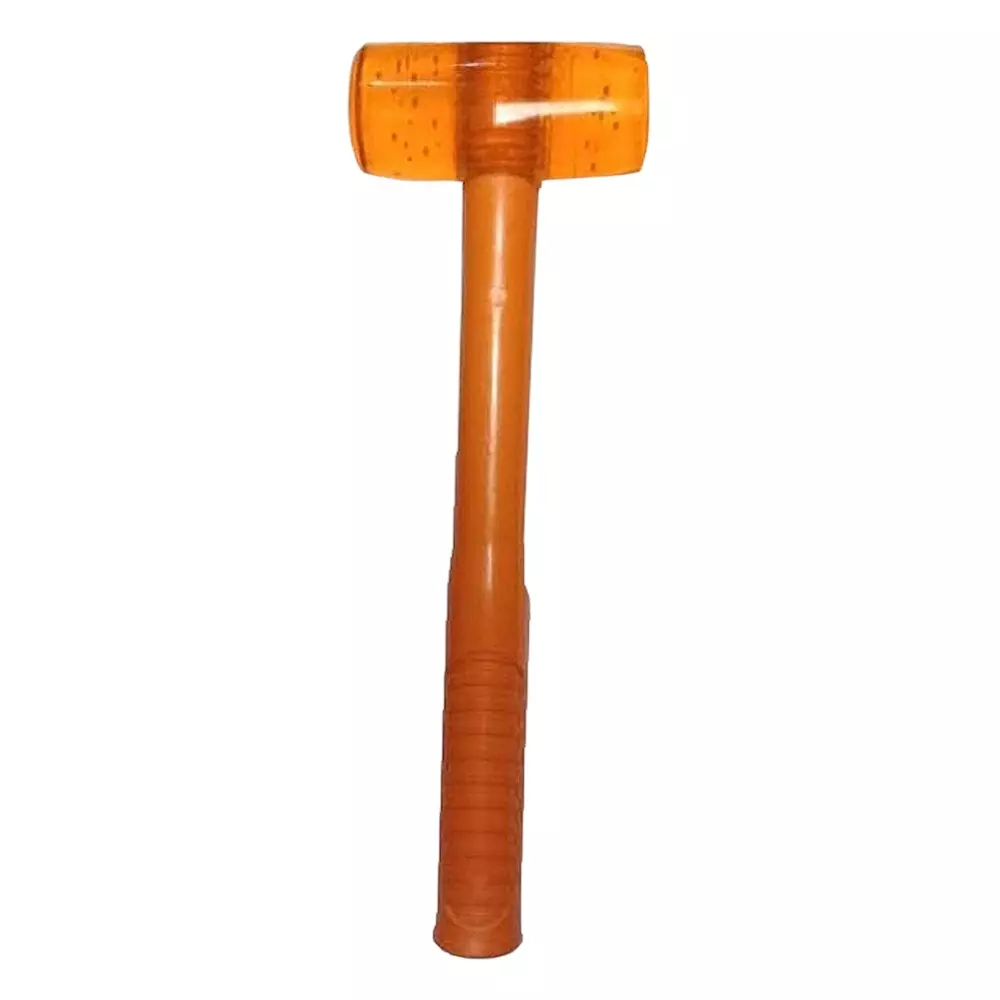
RUBBER HAMMER ORANGE
A hammer with a rubber head, typically orange in color.
Handle can be wood, fiberglass, or plastic with a non-slip grip.
Rubber head provides a soft strike that minimizes dents, scratches, or marks.
Uses / Advantages:
Furniture and woodwork: gently tapping joints or parts together without denting wood.
Tile and flooring work: setting tiles or panels without cracking or chipping.
Masonry: positioning bricks, blocks, or pavers without damaging edges.
Metal sheet work: bending or shaping metal without leaving hammer marks.
Automotive and maintenance work: tapping parts into alignment without damaging surfaces.
General tasks requiring a soft strike and minimal rebound.
Limitations / Notes:
Provides less impact force than a steel hammer; not suitable for heavy-duty tasks.
Not ideal for driving nails, which require a hard strike.
Rubber heads can wear, deform, or harden over time.
For hard materials like thick steel, concrete, or masonry, a different hammer may be needed.
Typical Weights / Variants:
Lightweight (250–500 g) for delicate work.
Medium weight (500–1000 g) for general workshop use.
Heavier versions available for more forceful strikes while still protecting surfaces.